
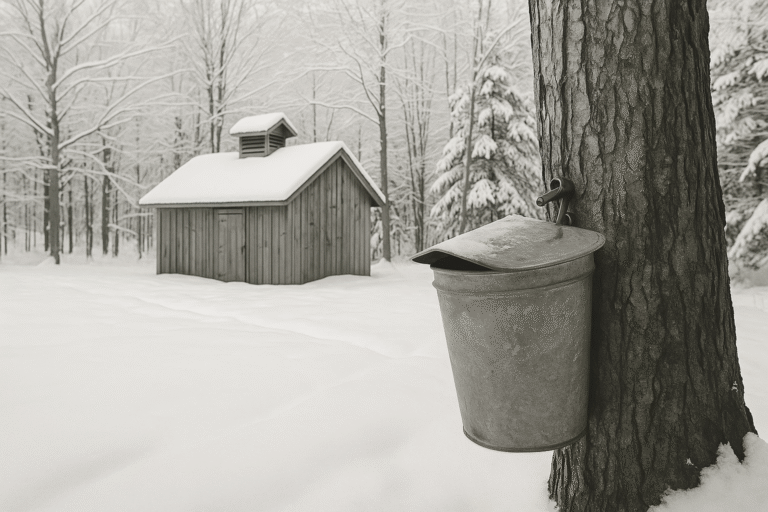
A Sweet Tradition Passed Down Through Generations
Maple sugaring has been a treasured part of New England life for centuries. Long before stainless steel evaporators and reverse osmosis machines, early sugarmakers relied on patience, tradition, and the rhythms of the season. Here’s a look at how maple syrup came to be one of New Hampshire’s most iconic products.
Indigenous Roots
The earliest sugarmakers in North America were Indigenous peoples who discovered how to collect sap and boil it down into sugar. They used:
-
- Hollowed-out logs
-
- Hot stones dropped into the sap
-
- Birch bark containers
-
- Simple wooden taps
They taught early European settlers how to harvest and use maple sap — knowledge that shaped the sugaring tradition we know today.
Maple Sugaring in Colonial Times
By the 1700s, maple sugar became a staple. Colonists used it because:
-
- It was cheaper than imported cane sugar
-
- It stored well
-
- It was considered a symbol of independence
Families made sugar blocks that could be shaved, grated, or melted.
The Rise of the Sugar Shack
In the 1800s and 1900s, sugar shacks became the heart of the sugaring season. These rustic buildings sheltered:
-
- Large iron kettles
-
- Early evaporators
-
- Families and neighbors who gathered to help
This era is where many of today’s beloved traditions began.
Modern Sugaring in New Hampshire
Today, the process is more efficient — stainless steel pans, tubing systems, food-safe tanks, and reverse osmosis machines help improve quality.
But the heart remains the same:
cold nights, warm days, and the joy of turning sap into something sweet.
At Dodge’s Sugar Shack, Jeff carries on the legacy passed down from his grandfather — with 2,900 taps, modern equipment, and the same love of sugaring that began decades ago.
Why This History Matters
Every bottle of maple syrup isn’t just food.
It’s heritage.
It’s family.
It’s New Hampshire.
Learn more about our story on the About Us page.