
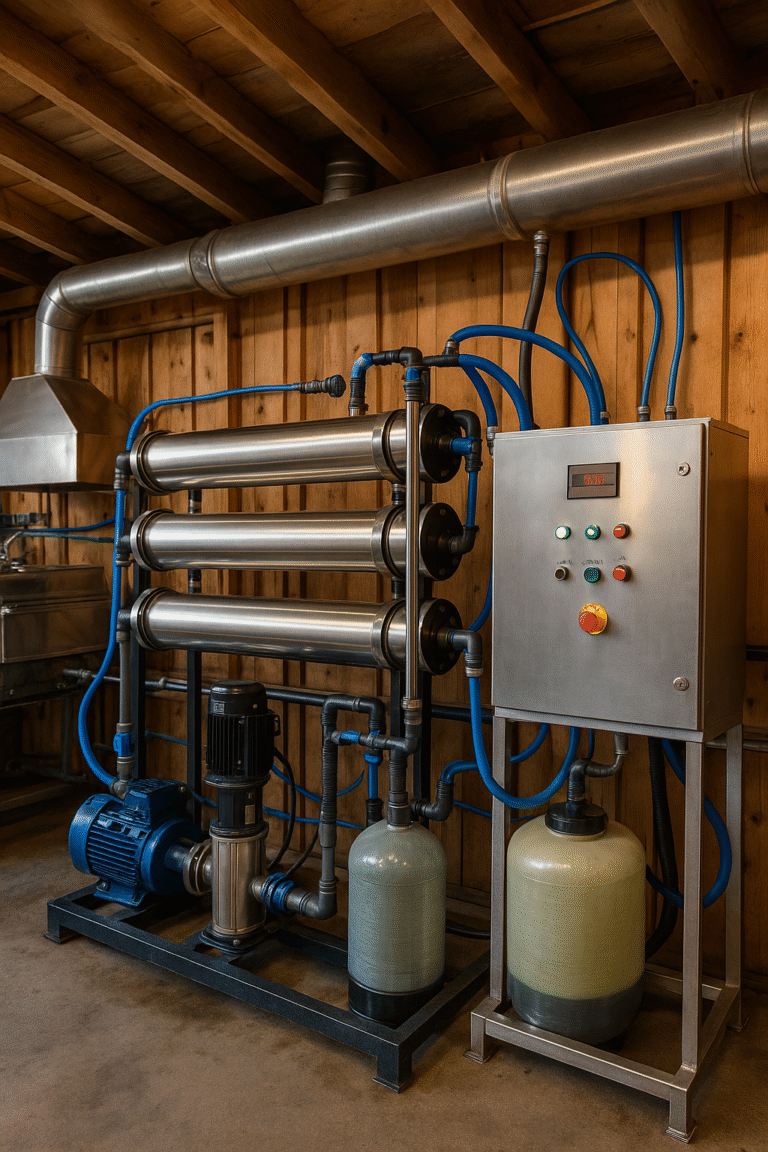
Learn how reverse osmosis works in maple syrup production and why modern sugar shacks use this technology to save time, fuel and preserve rich maple flavor.
A Modern Tool That Protects an Old Tradition
Maple sugaring has a long history rooted in tradition, but today’s sugar makers also use smart technology to make the process more efficient. One of the most important tools in a modern sugar shack is the reverse osmosis (RO) machine. If you’ve seen it mentioned on our From Sap to Syrup page and wondered what it does, here’s a simple explanation.
What Exactly Is Reverse Osmosis?
Reverse osmosis is a filtration process that uses pressure to force sap through a semi-permeable membrane. The result:
- Pure water is removed
- Sugar molecules and minerals stay behind
This concentrates the sap before it ever hits the evaporator.
Why Remove Water First?
When sap flows from maple trees, it’s typically around 2% sugar — which means 98% of it is water. A reverse osmosis machine removes much of that water, raising sugar concentration to around 13%.
That means:
- Less sap to boil
- Less wood, oil, or fuel used
- Less time spent boiling
- More consistent syrup flavor
- More consistent syrup flavor
Does RO Change the Flavor?
No. Reverse osmosis simply reduces water — the maple flavor compounds stay in the concentrate. In fact, RO allows sugarmakers to boil sap more quickly, which can help preserve the delicate aromatics of maple syrup.
Why Jeff Uses It at Dodge’s Sugar Shack
With 2,900 taps, boiling raw sap without RO would take far longer and require significantly more energy. RO gives Jeff more control over the entire process, helping him consistently produce the clean, high-quality syrup Dodge’s Sugar Shack is known for.
A Blend of Science and Tradition
Reverse osmosis doesn’t replace the heart of sugaring — the boiling, the steam, the long nights in the sugar shack. It simply gives sugarmakers a head start, allowing them to focus on what matters most: crafting delicious, pure maple syrup.
Learn more about our process of making maple syrup gold. Visit our From Sap to Syrup page.